Essays ·
Can the Founder Retire Without the Food Disappearing?
A buyer can save a food business. Can they preserve its cooking and let the founder retire? Five Singapore handovers test the promise, and the limits, of our own Plan.
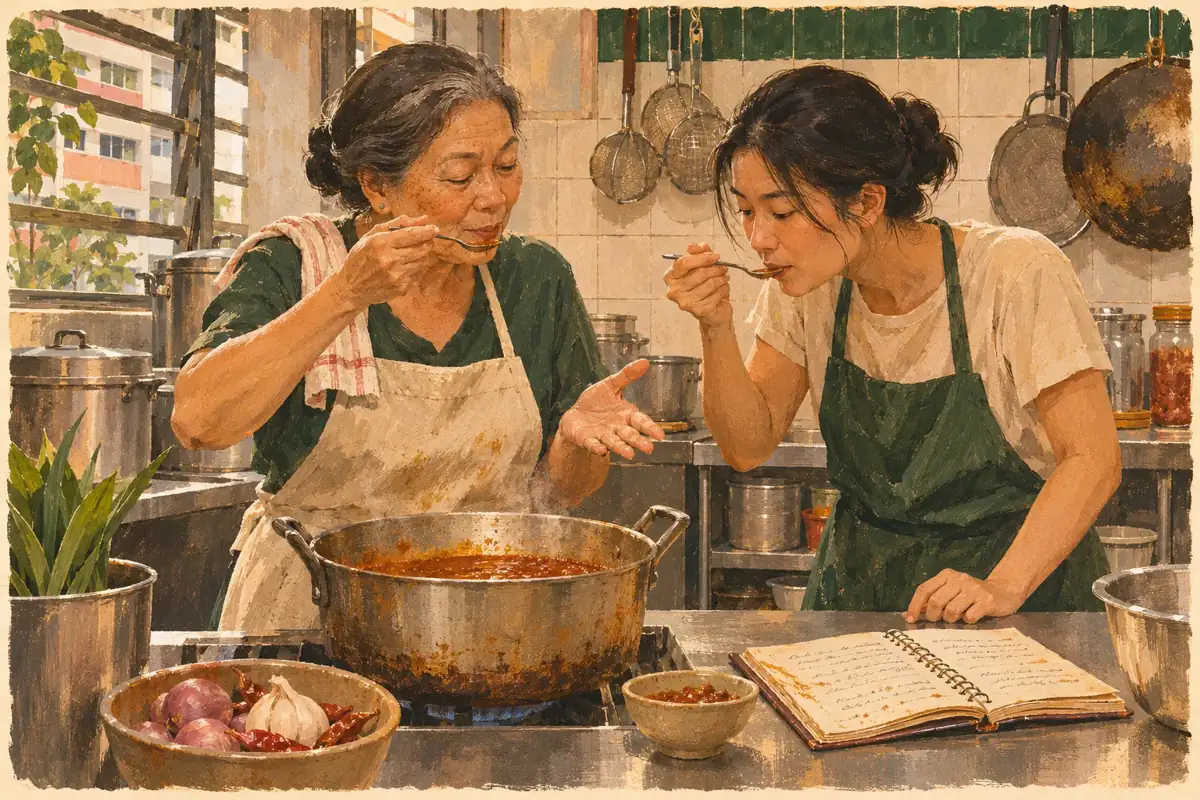
Porta Porta is preparing to close on 31 December 2026, after 33 years of serving Italian food in Singapore. Co-founder Rozianah Laino wants to retire. Her son has a career outside F&B. The family is open to someone taking over, but otherwise intends to close this chapter. (CNA Lifestyle)
When I read the article, part of me wondered whether I was reading a farewell or an invitation to buy the business.
On reflection, it can serve both purposes. There is no evidence before me that this was a paid advertisement. A closure story can attract customers for a final meal and alert a potential successor. Neither makes the family’s wish to retire less real.
Indeed, publicity has helped bring buyers forward before. The more difficult question is what happens after someone answers the invitation.
Does the founder get to retire? Does the successor make a living? And does the food that people remember survive?
These are three different tests. The sale announcement usually arrives before the results.
Porta Porta is a restaurant, not a hawker stall. Its tenancy, staffing and prices belong to a different operating context. Still, the dependence on a founder’s working life is familiar. The same concern runs through Silicon Wok’s work on hawker succession.
We should also get one uncomfortable point out of the way. Children do not owe us their parents’ careers. A son who chooses another profession has not failed the family’s customers.
The public’s affection for a food business creates a reason to help preserve it. It does not create an obligation for the family to keep running it.
That leaves us with the market. Sometimes it works. Sometimes it buys the name and struggles with everything underneath.
When the handover works
Shashlik offers a useful place to start.
After the restaurant closed in 2015, brothers Derrick and Alan Tan, sons of an original founder, bought the business with partner Lee Say Yeow. This was a purchase with family continuity, rather than a stranger buying an unfamiliar operation. Seven of the eight existing workers agreed to remain. Derrick was a chef, and the new owners invested in the kitchen. (Makansutra, 2016)
The people who knew how the place worked were part of its next chapter.
Was the food unchanged? Not entirely. At a disclosed hosted tasting in 2016, KF Seetoh thought the oxtail stew had improved, while the borscht lacked some of the beefiness he remembered. The cherry dessert retained its familiar character. CNA’s 2024 revisit continued to describe a restaurant carrying its Russo-Hainanese cooking forward.
That is a credible continuity story. It is not proof that every dish remained identical, or that every regular agreed.
My reading is that Shashlik benefited from several things arriving together: capable operators, personal attachment, retained staff and investment in the working kitchen. Sentiment helped motivate the purchase. There were also people able to deliver dinner afterwards.
Yong Huat shows that a successor need not come from the family.
In 2020, publicity about the Joo Chiat stall’s impending closure brought forward four interested buyers. Its owners chose a successor with hawker experience and sold the business and recipes for S$20,000. The arrangement included the existing stall, signboard and training. (8days; CNA’s full account)
Even at handover, the differences were visible. The retiring owner noticed smaller portions. A regular quoted in the report still enjoyed the food but found it less satisfying than the former cook’s version. Subsequent diner accounts likewise described changes in oiliness, sauce and portions while remaining positive about the meal. These are individual judgements, not a controlled comparison.
I would call that a qualified success. A sale happened. The founders could step away. Their dishes continued to be cooked, though the experience changed.
An experienced buyer and continuity of location probably helped. The modest purchase price may also have reduced the financial burden. But without the accounts, we cannot say whether it was a good investment.
Nor should we turn two weeks of reported training into a recommended apprenticeship. A successor arrives with a different starting level of skill. Fifty years at a wok cannot be measured against a calendar alone.
When a sale is not enough
Kay Lee provides a less comfortable contrast.
Aztech bought the roast-meat business in 2014 for S$4 million, including property valued at S$2.1 million. Calling it a S$4 million recipe sale obscures what was purchased. Its planned expansion to ten outlets within two years did not materialise. By the account in Nigel Chua’s 2024 IPS paper, the business had returned to one outlet, and Aztech had exited ownership.
Yet the taste evidence does not support a tidy story of immediate culinary collapse. DanielFoodDiary’s 2015 Suntec review found the char siew close to the original, while criticising the duck as tough and dry.
The sale succeeded as a transaction. The expansion ambition fell short. Those outcomes should not be confused with the disappearance of the dish.
The lesson I draw is about the size of the task. Taking over one established kitchen and reproducing its economics across several locations are different undertakings. New premises need their own customers, staffing and cost structure. The queue, inconveniently, is not included in the purchase.
The available reporting does not establish how much each factor contributed to Kay Lee’s retreat. It does establish that money and a recognised name were insufficient.
Lao Chaozhou offers a more specific account of what can go wrong.
Its collaboration with Select Group was a licensing and expansion arrangement, not an outright sale. Founder Grace Lim told Chua that the Tampines outlet had generated no profit-sharing payment for her. She identified quality control as a difficulty: cooks needed to taste and adjust for variations in ingredients. She trained workers but could not supervise them while running Ghim Moh. The Tampines outlet closed in November 2023. (IPS, pp. 44–48)
Here, the recipe had moved. The founder’s daily judgement had proved harder to reproduce.
That is an explanation from the founder, not a complete audit of the outlet’s failure. Still, it points to a practical problem. A recipe tells someone what to add. An experienced cook knows when today’s ingredients require something different.
There is a financial lesson too. A share of future profit can sound like retirement income. If the outlet makes no distributable profit, the payment may never arrive.
When no buyer comes forward
Then there are businesses that struggle to find a buyer at all.
China Street Fritters sought S$1 million for its recipes, later reducing the asking price to S$500,000. In 2023, Ng Kok Hua described unsuccessful negotiations, labour-intensive preparation and difficulty attracting younger customers. His asking price also reflected the retirement needs of several family members. (CNA Lifestyle, May 2023)
It would be easy to conclude that the price was simply too high. That would tell us little about the underlying problem.
A seller is looking back at decades of work and forward to retirement. A buyer must look at what remains after paying for tomorrow’s labour, ingredients and premises. Both can be reasonable and still fail to agree.
The story did not end with the announced closure. Ng and his wife subsequently reopened in Telok Blangah, with smaller-scale operations and an attached kitchen that reduced other costs. At that report’s publication, the recipe sale still had no taker. This was continued founder operation, not a completed succession. (CNA Lifestyle, August 2023)
We should be careful what we count as a rescue. If survival still depends on the retiring cook returning to work, we have bought time. We have not yet solved succession.
What are we trying to preserve?
Taken together, these cases resist a simple verdict on commercial handovers.
| Case | Arrangement and reported outcome | What the evidence teaches |
|---|---|---|
| Shashlik | Family-linked buyout; restaurant revived | Staff and skills stayed; reviewers found continuity alongside changes. |
| Yong Huat | S$20,000 sale in 2020; stall continued | Experienced successor and training helped; taste and portions changed. |
| Kay Lee | Acquisition completed; expansion later contracted | Buying a business did not establish a repeatable chain. Taste evidence was mixed. |
| Lao Chaozhou | Licensed expansion; Tampines outlet closed in 2023 | Founder reported quality-control difficulties and no profit-sharing payout. |
| China Street Fritters | Recipe sale uncompleted in 2023 reporting; founders reopened | Continued operation did not deliver a successor or full retirement. |
These are selected cases, not a representative sample. The outcomes refer to the reporting dates cited above, not a fresh audit of each business. They cannot tell us the success rate of hawker transfers. They can tell us what to investigate.
They also make me cautious about the word ‘authentic’.
Authentic to which moment? The founder’s early years? The version a regular remembers from childhood? The last plate before retirement?
Cooking changes even when ownership does not. Ingredients vary. Suppliers disappear. Cooks improve recipes or adapt them to their health and customers. A new owner may preserve the defining character while changing something peripheral. Another may keep the name while losing what made the food distinctive.
We need to ask more precise questions.
Which flavours and techniques define the dish? Can the successor produce them consistently through a busy service? Do the founder and regulars recognise the result? What has changed, and why?
Published reviews help. They cannot establish permanent authenticity, especially when they describe different dishes, outlets and years.
Our Plan faces the same tests
This is where the distinction between the Hawker Library and Saving our Hawker Heritage, the Plan, matters.
The Library assembles evidence, models and their limits. The Plan proposes what we might do with them. I would prefer not to mark my own homework, however encouraging the results might be.
The present Plan already recognises several lessons from these cases.
Its proposed Culinary Seed Bank would record techniques, ingredient choices and the decisions behind a dish. The test is practical: another trained cook must be able to use the record at the master’s stall. Recording an interview is a beginning. It does not demonstrate that the knowledge has transferred.
Its proposed taste panel would judge continuity of character, with private feedback and coaching. It also allows the reference preparation to change when a justified improvement or permanent supply change warrants it.
That flexibility matters. Preserving living food should leave room for a successor to become a good cook in their own right.
To be fair, taste assessment is not an invention of this Plan. NEA’s existing Hawkers Succession Scheme already includes a three-month apprenticeship and a tasting evaluation involving the veteran, NEA and an independent advisory panel.
The question is what support and evidence we need after that initial handover.
On money, the proposed Succession Mortgage would let a successor pay for goodwill over time, with limits tied to business performance. The current Plan explicitly requires earnings to be adjusted for fair labour costs, future rent and reinvestment. It does not promise full recovery to the retiree.
That is important. A business can look profitable because family members have worked long hours without paying themselves properly. A successor cannot necessarily inherit those sacrifices.
The Plan also separates commercially viable succession from heritage that requires grant support. Where the future earnings cannot carry a purchase, a larger loan is no solution.
Yet the same scrutiny must apply to our proposals.
A model can show that repayments are affordable under its assumptions. It cannot show that a willing successor will stay, that regulars will return, or that the dish will survive the founder’s absence. Those outcomes have to be demonstrated in a working kitchen.
The protected-income provision illustrates the distinction. It can reduce or pause a succession payment. It cannot create income when the business itself earns too little. Likewise, charging a royalty on revenue makes the payment less dependent on accounting profit, but adds a cost even in a thin-margin month. Safeguards are essential; they do not abolish risk.
Before the founder steps away
What does this mean for Porta Porta?
First, we should not presume that it needs rescuing from a failed business model. The reported reason for closure is retirement. We do not have its accounts, a proposed sale price or the terms of a possible handover.
But the other cases suggest what a serious succession discussion would need to establish.
Who would actually run the kitchen? Which experienced employees would want to remain? What can be taught, over what period, and with what compensation for the founder’s time? Would the business still work after paying someone fairly to replace her contribution?
There is also the relationship with customers. Porta Porta’s appeal includes family hospitality and memories accumulated over decades. A successor can learn the cooking. They cannot purchase the original family’s presence. They would need to build relationships of their own.
My preference would be to establish whether one restaurant can continue well before attaching an expansion story to it.
I would also want a bounded handover. If retirement is the purpose, an arrangement that requires the founder to keep correcting the kitchen indefinitely has missed something fundamental.
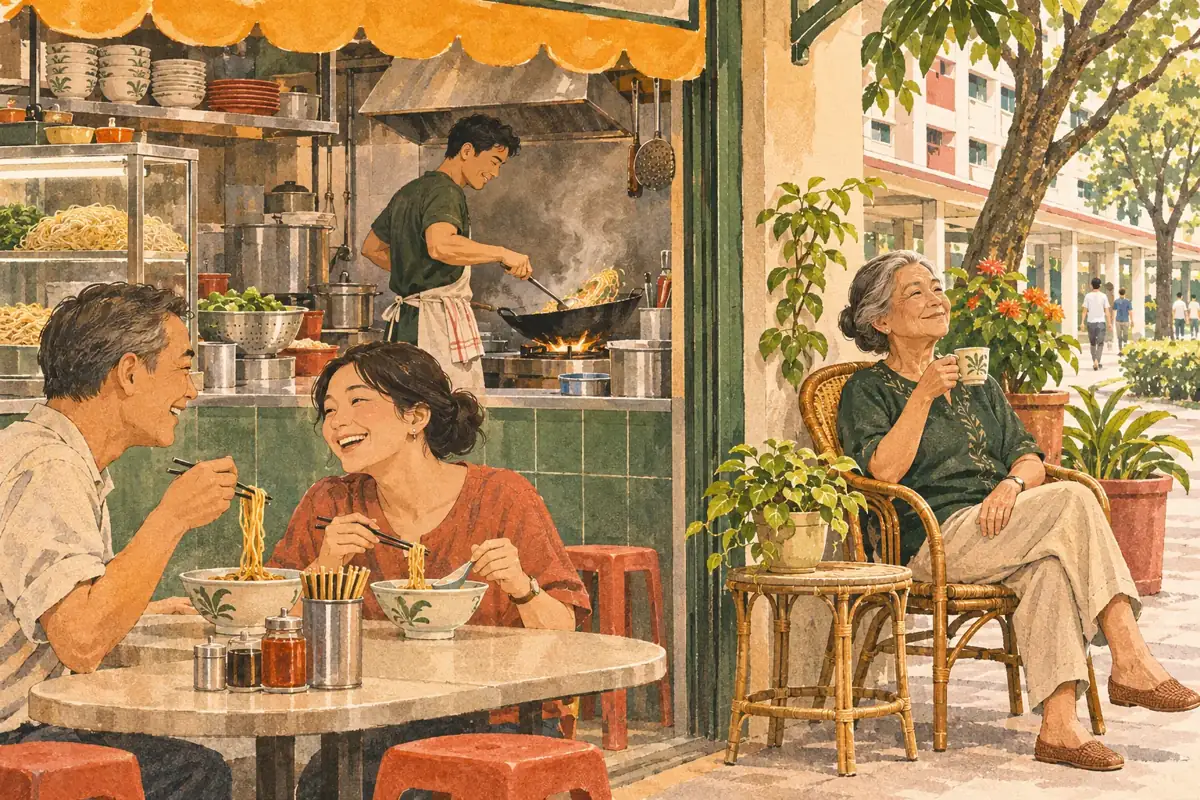
The most convincing test of a handover may be an ordinary service without the founder: the food holds up, the customers return, and the accounts still work.
That is a useful test for Silicon Wok too.
As we develop the small projects described in our starting plan, I would like us to examine completed transfers alongside failed deals and abandoned partnerships. With the owners’ consent, we should follow the operating hours, earnings and food after the handover. We should record why people leave as carefully as why they begin.
The point is to find out which parts of the Plan deserve to grow, which need changing, and which should be dropped.
Some businesses will find buyers. Some dishes may survive through apprentices, a different format or documentation that another cook can use. Some owners will prefer a clean ending. That choice deserves respect too.
I hope Porta Porta finds a future its family is comfortable with. If that future is retirement, they have already given their customers 33 years.
For the rest of us, there is work to do before the next farewell announcement.
If you have bought, sold or tried to pass on a food business, I would like to hear what happened after the headline. Especially the part that did not go to plan.