Essays ·
Whose Heritage, Whose Rental Income?
Teochew Meat Puff already has a son in the business. As the family leaves the pasar malam circuit, I want a closer look at what hawkers pay to keep trading.
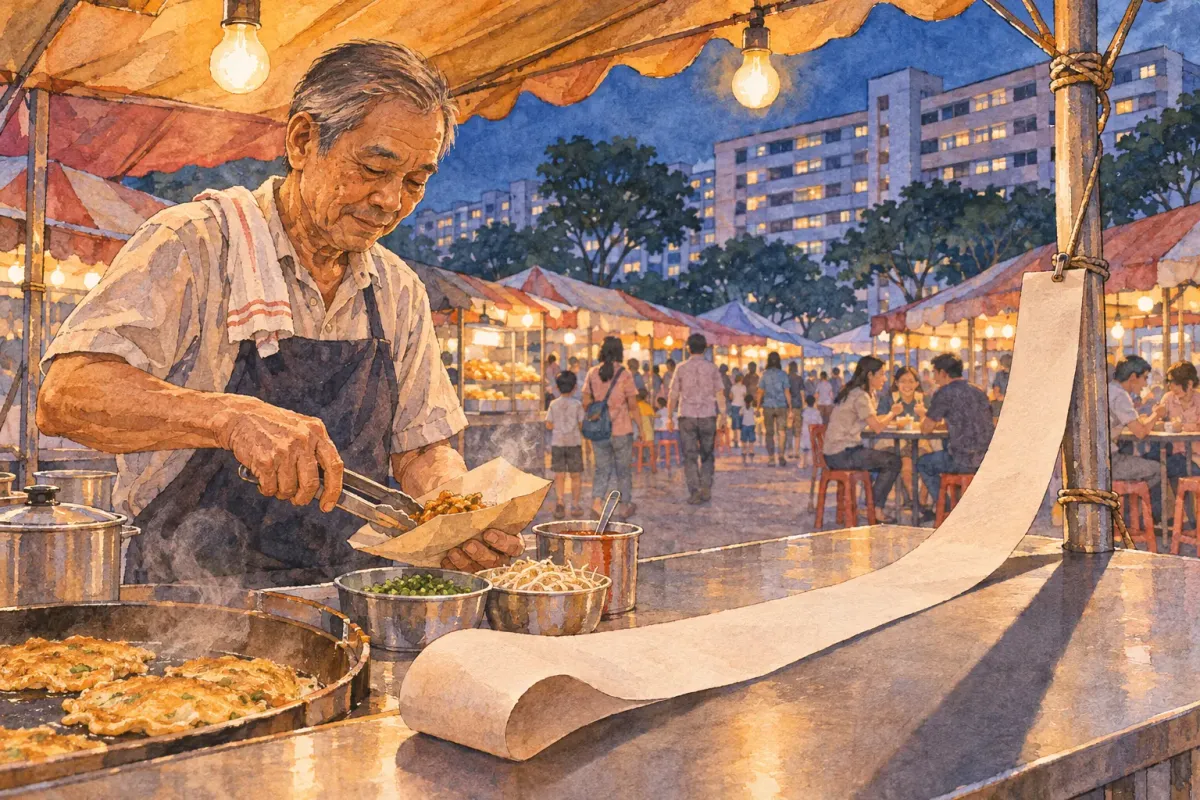
Good Sunday, everyone. Teochew Meat Puff is leaving the pasar malam circuit after forty years. Mothership reports that its final stint, opposite Fernvale Primary School in Sengkang, ends on 14 November. The family cites rising costs, weaker sales and the need for its elderly founders to rest.
The founder is approaching 90 and still helps prepare and cook the food. His son, who runs the business alongside his parents, is 59. Sales have fallen by more than half compared with before the pandemic. Daily rent can run into hundreds of dollars. Sometimes, the family only breaks even.
They have earned their rest. What troubles me is that a son has stayed in the business, and the family trade is still leaving the scene.
In my previous post about Lao Liang, I lamented the loss of a culinary tradition without an announced successor. This story asks something more of us. Before we encourage another generation to enter the trade, we should examine what they must pay to remain in it.

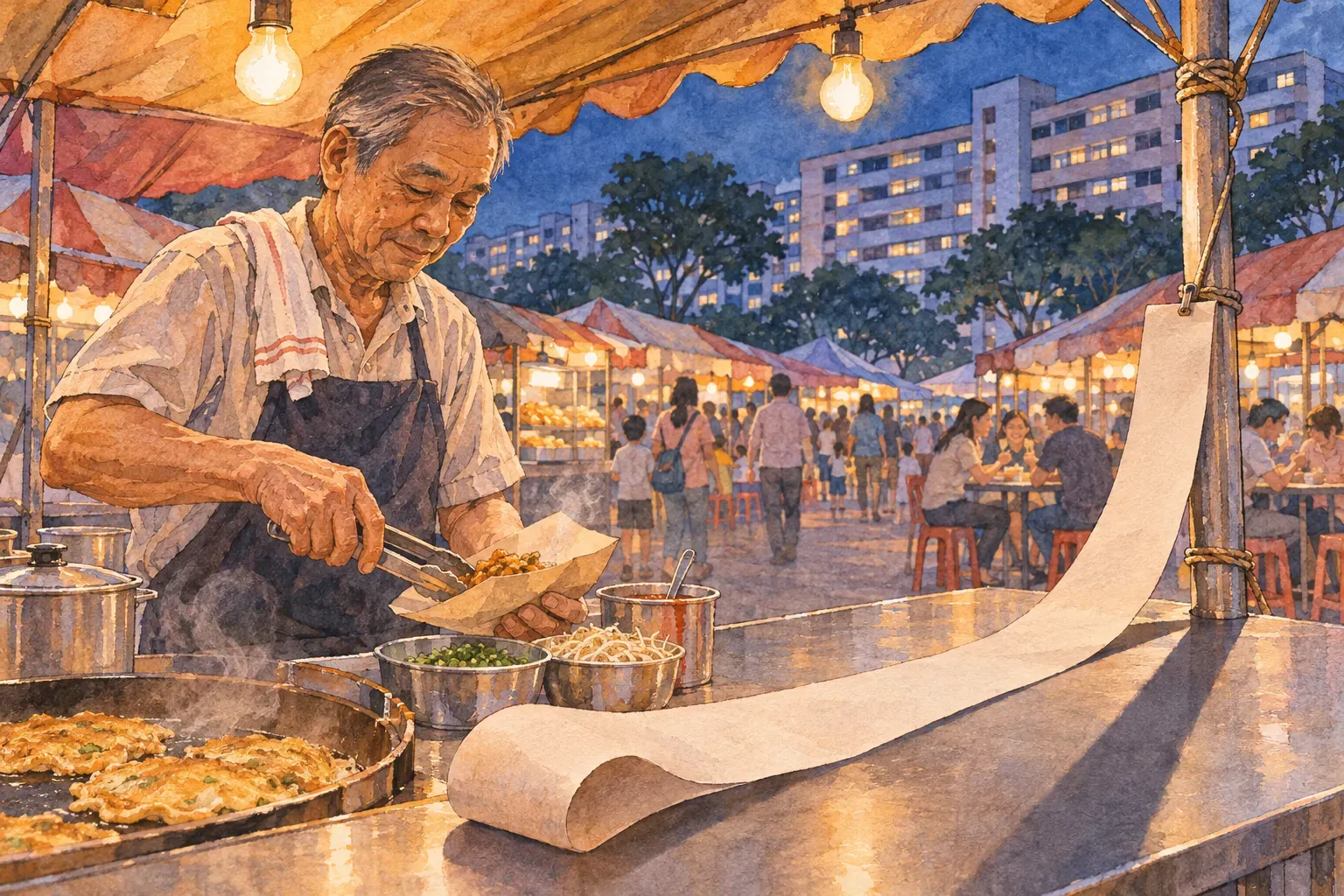
I consider pasar malams part of our hawker culture, even as they are not recognised under Singapore’s UNESCO inscription for our hawker culture. The food, the itinerant traders and the neighbourhood gatherings belong to that story. A hawker does not become less relevant to our heritage because his stall stands beneath a tent.
To be fair, the National Heritage Board (NHB) has recognised this history. Its 2022 exhibition, Lelong! Lelong! Pasar malam in Singapore, documented the markets and the people behind them. I welcome that work, but would love to see NHB extend their interest in those traders by proactively engaging with NEA and SFA to ensure pasar malam hawkers can continue to operate sustainably.
Each party’s responsibilities is clearly defined, but pasar malam hawkers can still fall through the cracks in between. SFA handles temporary-fair permits and food-safety requirements. Organisers arrange the site and set stall rents. Where access to scarce pitches is controlled and allocation is opaque, that power can earn them more than a fair return for the services and risks they take on. Higher fixed rent means more sales just to break even. Hawkers can’t just match rent increases with dollar-for-dollar rises in food prices. If customers walk away, the hawker must absorb the squeeze, raise prices where he can, reduce portions or leave. Customers see the prices and the portions and not the rental terms behind them; their anger can land on the cook rather than the conditions he trades under. If oversight stops at each agency’s remit, who answers for whether our pasar malam hawkers can still earn a fair living?
That is the gap I want addressed.
For bazaars under the People’s Association (PA) framework, the Government’s explanation is straightforward. PA sets tender conditions. The appointed operator sets stall rents based on market rates, taking account of location, duration and business type. Traders know the charges before deciding whether to participate.
Granted, nobody is obliged to take a stall from pasar malam event organisers. Still, each time a trader declines an unaffordable rent sees us potentially losing something worth keeping. ‘Market rate’ tells me little about whether we have designed that particular market well.
I want rent-seeking examined here: income gained through control over access to trading space, beyond a fair return for providing it. Organisers put up infrastructure, coordinate services and take risks. They deserve to earn from that work. So do the people whose food gives customers a reason to come.
I have not seen this event’s rental contract or accounts. I cannot accuse its organiser of profiteering, or attribute the family’s departure to rent alone. Age, ingredient costs and weaker demand all matter.
Still, we should be as willing to examine the returns from controlling trading space as we are to question a hawker’s productivity. Telling the cook to work smarter is an incomplete answer if we leave the cost of access unquestioned. Higher income does not always need to depend on higher costs.
Our government already makes choices about hawker rents. The National Environment Agency (NEA) sets rental policies for the centres it manages directly. At centres run by socially conscious enterprise operators, stall rents are capped at average independently assessed market rent.
Temporary markets have different costs. I would not compare a daily bazaar rent with a permanent stall’s monthly rent and call the difference profiteering. But those differences do not put rental terms beyond public influence. Wisma Geylang Serai introduced a rental cap for its 2024 bazaar after reviewing conditions and feedback. There is already a precedent.

For markets on public land or arranged by public bodies, I would start with the money. Publish what the operator pays for the site, what stallholders pay the operator, and every compulsory extra. Explain which services those charges cover. A tender award alone cannot tell us how much of the trader’s takings goes towards being allowed to trade.
Then make the survival of distinctive food traders part of how organisers are assessed. A full market can still lose the stalls that made it worth visiting. NHB can help identify those traditions; NEA can bring its experience of hawker livelihoods. PA and the relevant landowners must carry those concerns into the terms they set.
I would also be wary of subsidising the hawker before examining the charges. We should know whether public support leaves the cook better off or simply creates room for the next rental or price increase.
The family behind Teochew Meat Puff owes us no further years at the fryer. For those who continue at our pasar malams, I want PA and the relevant public landowners to show how their rental terms support a viable living. We owe the next generation that answer before asking them to take over.